









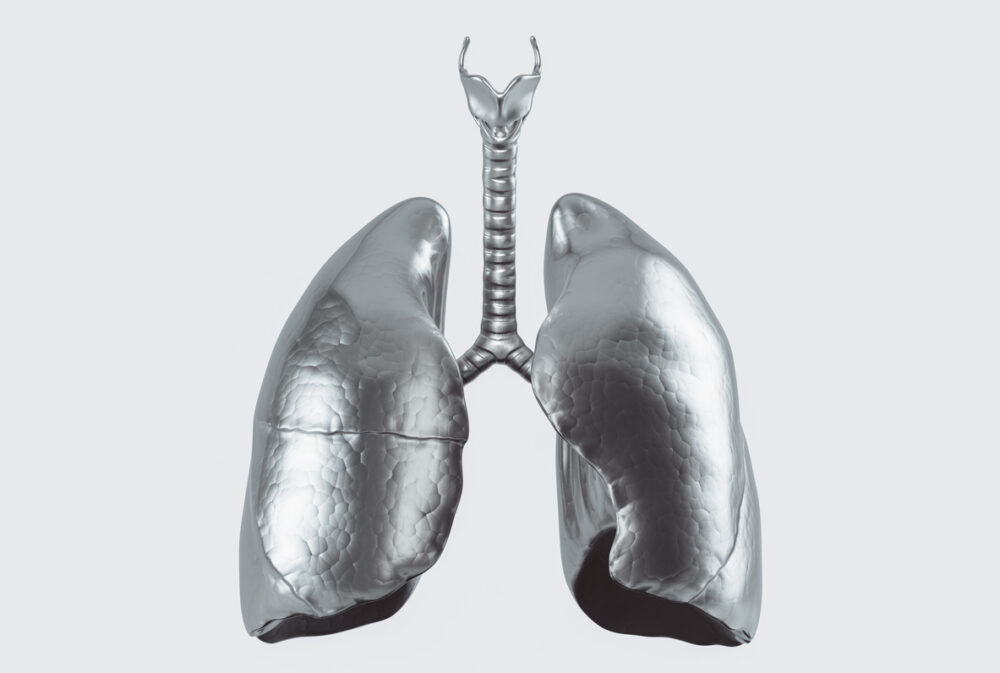
E-cigarettes can quickly lodge toxic metals deep into the lungs, where they may damage tissue, according to new research that provides detailed evidence about risks of vaping.
Even short-term exposure produces a measurable buildup of toxic metals in lung tissue, potentially increasing the risk of chronic lung problems, cancer, cardiovascular disease, and other conditions.
The study, published last month [April 2026] in Analytical and Bioanalytical Chemistry, is the first to use a specialized method to break apart e-cigarette vapor, separate its components, and precisely measure toxic metals. The researchers detected for the first time chemical evidence that certain metal-based compounds (organometallics) that are easily absorbed by the lungs travel in e-cigarette aerosols.
The findings come as the FDA yesterday announced its authorization of fruit-flavored vapes, including mango and blueberry, for adult smokers. The shift in policy follows months of appeals to President Donald Trump from the vaping industry.
“Collectively, these findings provide novel evidence that vaping delivers toxic elements to the lung, disrupts iron homeostasis [normal balance], and poses risks for pulmonary and systemic health,” the authors wrote.
Exposures to toxic metals can come not only from the liquid, but also from the metals in the heating devices, Dr. Pamela Ling notes. That suggests that regulation of e-cigarettes needs to include the whole device, similar to the definition of “e-cigarette” in California, she says.
“Research like this is important because the tobacco companies are aggressively promoting vaping as ‘harm reduction’ to distract from the fact that the majority of their profits are still from cigarettes and they are not, in fact, transforming but instead growing a new nicotine market,” said Ling, a professor of medicine and director of UCSF’s Center for Tobacco Control Research and Education. “This study contributes to the growing body of evidence that e-cigarettes carry their own significant health risks.”
Dr. Laura Crotty Alexander, a professor of medicine and associate division chief at the University of California, San Diego, agrees: “These findings will help us understand exactly why vaping causes lung damage and raises cancer risk. Identifying accumulation of inhaled metals in lung tissue is an important clue — helping to explain the ‘how’ behind vaping-related diseases.”
E-cigarette surge sparks public health concerns
In the U.S., young adults and adolescents use e-cigarettes more than any other tobacco product. Industry product design, aggressive marketing, widespread access targeting vulnerable populations, and limited regulatory oversight worldwide have led to more than 100 million people, including at least 15 million children, using e-cigarettes.
Though industry promotes vaping as a safe alternative to traditional smoking, research shows children, adolescents, and young adults who vape are about three times more likely to start smoking cigarettes than non-users. A review last year in Carcinogenesis concluded that nicotine e-cigarettes are likely carcinogenic and may increase oral and lung cancer risk. More recent findings show that widely promoted sweet, minty, and fruity flavors can increase nicotine use and addiction risk.
The new study builds on emerging research showing vapers are exposed to toxic and carcinogenic metals. A 2020 study found that levels of metals and metalloids (elements like arsenic) in e-cigarette users were similar to or higher than those in cigarette users, and higher than in cigar users.
In another study from Johns Hopkins University, researchers found that nickel, chromium, and lead appeared across multiple device types. Toxic metals were detected in every sample.
A complex aerosol, not just nicotine
E-cigarettes, most of which contain nicotine, heat liquid into an aerosol that users inhale. Both the liquid and aerosol, however, are chemically complex mixtures. They contain many substances beyond nicotine, which itself is harmful and highly addictive.
These include toxic metals, air pollutants, flavoring chemicals, and cancer-linked compounds from device hardware or e-liquid ingredients. High temperatures in the heating element (device coil), combined with chemicals in the liquid, may also create new metal-containing compounds, the researchers say.
Breathing in toxic metals and other pollutants can cause inflammation, disrupt lung and immune system development, and lead to long-term breathing problems and disease. Some metals, like zinc and copper, are essential in small amounts but harmful at higher levels.
“The question remains as to whether these metals detected in the lungs remain confined to the respiratory system or enter the circulation to accumulate in distant organs, which requires further investigation,” the researchers wrote. “This possibility of redistribution extends the potential health implications of vaping beyond local lung injury.”
Metals deposit quickly and unevenly
The researchers analyzed e-liquids, aerosols, and lung tissue from mice exposed to nicotine vapor twice daily for 30 minutes over four days. They chose a lab mouse strain that responds strongly to cigarette smoke, developing lung inflammation and airway changes similar to human smokers.
The team then combined chemical testing with spatial imaging to trace how and where metals moved from device to lung. They detected multiple metals in both liquid and aerosol, including nickel, lead, copper, aluminum, tin, arsenic, and traces of mercury.
Metal buildup increased with more exposure, and different metals collected in different areas. For example, lead, nickel, and tin concentrated in the lung’s upper regions, while zinc was more common in lower lung areas.
Even brief exposure led to measurable metal accumulation, the study shows. Metals clustered in patchy, localized deposits rather than spreading evenly. This buildup may increase the risk of lung damage, chronic disease, and impaired healing over time.
“Of concern is that measurable changes in [lung] tissue metal concentrations were observed after only a small number of puffs, indicating that even brief exposure was sufficient to alter metal levels,” the researchers wrote.
More puffs, more toxic metals in lungs
The exposure patterns suggest inhaled metals can persist in lung tissue rather than clearing quickly, the researchers say. Nickel levels increased significantly, while copper, lead, and tin also rose:
- Nickel rose from about 77 nanograms per gram (ng/g) in unexposed lung tissue to 368 after 8 puffs) and 242 after 32 puffs.
- Copper and lead spiked at high levels, with peak amounts increasing more than 3 times for copper and 25 times for lead, compared to controls.
- Tin also rose sharply, reaching levels about 15 times higher than controls at the highest exposure.
Because there are no specific regulatory limits for metals in e-cigarettes, the researchers could compare results only to safety standards for inhalation from other fields, like workplace air and pharmaceutical products. This gap exists due to limited inhalation data, not because the metals are safe, the researchers say.
Compared to pharmaceutical limits (namely, USP 232) for inhaled medicines, several metals were far higher than what is considered safe. Copper and tin also exceeded recommended limits, while:
- Arsenic was about 480 times higher
- Nickel about 250 times higher
- Chromium about 60 times higher
- Mercury about 180 times higher
- Lead about 17 times higher
“Although USP 232 limits were developed for pharmaceutical inhalation products rather than e-cigarettes, they represent a conservative, health-based benchmark for inhalation exposure,” the authors wrote. “The magnitude by which several metals herein exceed these limits reinforces the concern of metal contamination in the tested e-cigarette liquid and the absence of equivalent product-specific standards for e-cigarette emissions.”
Iron levels fall as toxic metals rise
At the same time, vaping exposure significantly lowered iron levels in the lung to the extent that the researchers called it concerning. Iron supports oxygen transport, immune function, and energy production for cells. Iron deficiency has been linked to serious lung diseases like chronic pulmonary obstructive disease (COPD), cystic fibrosis, and acute respiratory distress syndrome.
Researchers suggest the drop may reflect a subtle shift or redistribution of iron within the body. Or it may be due to changes in how iron is processed, rather than simple loss.
Taken together, the combination of lower iron, localized lead buildup, and increases in other metals and metalloids (like nickel, copper, tin, and arsenic) are “particularly concerning,” the researchers say.
“These risks are compounded by the high prevalence of e-cigarette use in adolescents, who may be more vulnerable to toxicant effects during critical developmental periods,” they wrote.
Study limits and next steps
Researchers experimented with a mouse model over four days, so the study does not measure long-term disease outcomes in humans. Exposure patterns also may differ across devices, liquids and user behavior, the researchers note.
Still, the study likely underestimates real-world exposure and risk, Crotty Alexander suggests.
“First, it was conducted in mice, which breathe exclusively through their nose, meaning many metal particles got filtered out before ever reaching the lungs,” she said. “Second, the mice were only exposed once, whereas most people who vape do so repeatedly throughout the day, every day.”
Rising use and regulatory gaps
Unlike cigarettes, e-cigarette devices and liquids vary widely and often lack quality control, using materials with unknown health risks and limited oversight.
No specific limits exist for metals in e-cigarette liquids or vapor, meaning users may be exposed to unsafe levels without knowing it. Agencies like the FDA and World Health Organization (WHO) focus on nicotine and labeling.
The researchers call for stricter standards for device materials, mandatory testing for metal emissions, and human studies, especially among adolescents who may be more vulnerable to toxic effects during critical developmental periods. They also urge studies comparing devices, long-term exposure, diverse e-liquids, and whether metals spread beyond the lungs.
“Given the widespread use of disposable e-cigarettes among adolescents, regulatory oversight of device materials and mandatory metals testing are urgently needed,” the authors wrote.
Reference
McGrath J, Royle O, Thorpe A, et al. Analytical investigation of metal distribution from e-cigarette aerosols to lung deposition using multi-platform mass spectrometry. Analytical and Bioanalytical Chemistry. Published online 2026: 1-15. doi:10.1007/s00216-026-06487-1