







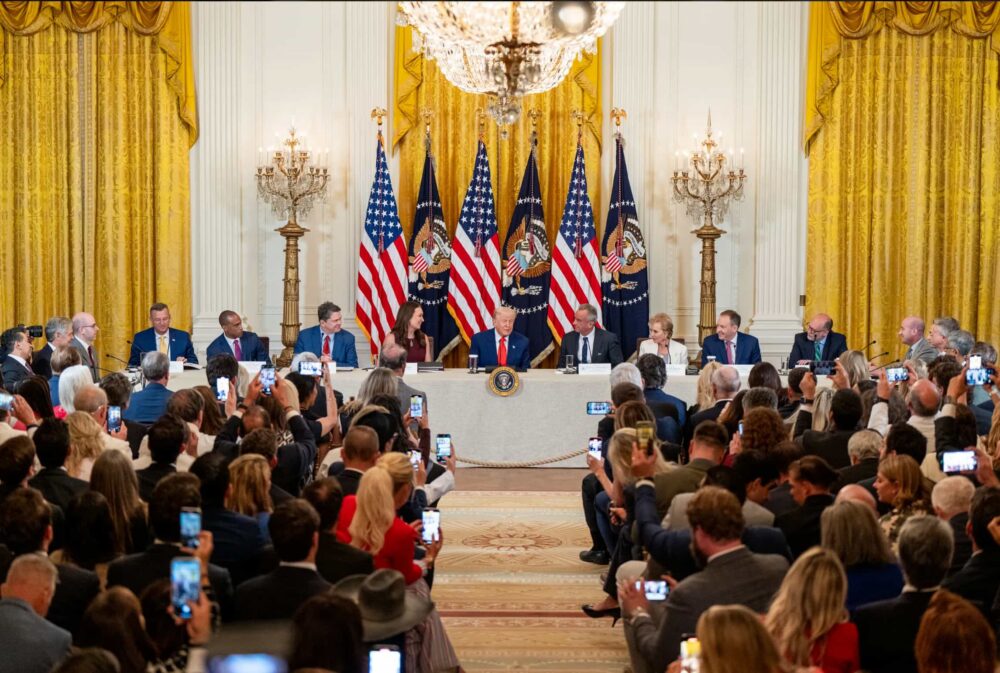
CropLife America’s “most significant accomplishment” in 2025 was its campaign to influence the Make America Healthy Again (MAHA) Commission’s findings, according to Paul Rea, former board chairman of the pesticide industry trade group.
Rea, a 25-year veteran of BASF, the world’s largest chemical company, made the comments in CropLife America’s 2025 Impact Report. The report celebrates the removal of proposed pesticide restrictions from the MAHA Commission’s final strategy as “a win for farmers and the crop protection industry.”
CropLife America is the leading pesticide industry trade group in the U.S., funded primarily by the world’s largest pesticide companies, including Bayer, BASF, Corteva, FMC, and Syngenta.
When asked about the trade group’s most significant accomplishment of 2025, Rea said, “There is no better example than how CropLife America, with the support of its members and partners, raised its voice to highlight the potential impacts of the MAHA commission findings.”
Mobilizing to shape MAHA report
President-elect Donald Trump promised in 2024 to “end the chronic disease epidemic” and protect Americans from “harmful chemicals, pollutants, pesticides” and other health threats. His administration’s MAHA agenda pledged to end the “corporate capture of public health” and put “gold standard science – not special interests – at the center of every decision.”
In February 2025, Trump established the MAHA Commission, chaired by Health Secretary Robert F. Kennedy Jr., to investigate rising chronic diseases, particularly among children, and to develop a policy roadmap to address root causes of disease.
The commission’s initial report, released in May, warned about corporate influence over science and policy and raised concerns about health risks associated with glyphosate and atrazine, the two most widely used herbicides in the U.S. Both are classified as probable human carcinogens by the World Health Organization’s cancer research agency.
CropLife member Bayer considered the MAHA report “an unprecedented threat” to its business model, Politico reported. Industry groups, including CropLife America, mobilized an intense lobbying effort to “shape the next installment” of the MAHA report, as the Washington Post reported. By summer, dozens of food and pesticide industry groups were meeting with Trump administration officials about the report.
CropLife gins up ‘Farmer Voices’ campaign
The MAHA report was “troubling,” CropLife President Alexandra Dunn told Brownfield News in late 2025. It put the industry “a bit on our heels that perhaps some better information needed to be shared, and so that’s what we spent our time doing.”
“The White House was very responsive. They opened their doors.”
– Alexandra Dunn
CropLife’s impact report details the scope of that effort: 5,200 farmer letters, meetings with administration officials, congressional coordination, paid advertising and a messaging toolkit distributed to agricultural organizations.
“The White House was very responsive. They opened their doors,” Dunn said.
A former EPA official, Dunn led the agency’s Office of Chemical Safety and Pollution Prevention, overseeing federal pesticide and chemical regulation during the first Trump administration from 2019 to 2021. She joined CropLife in 2024 and received more than $790,000 in salary and other compensation that year.
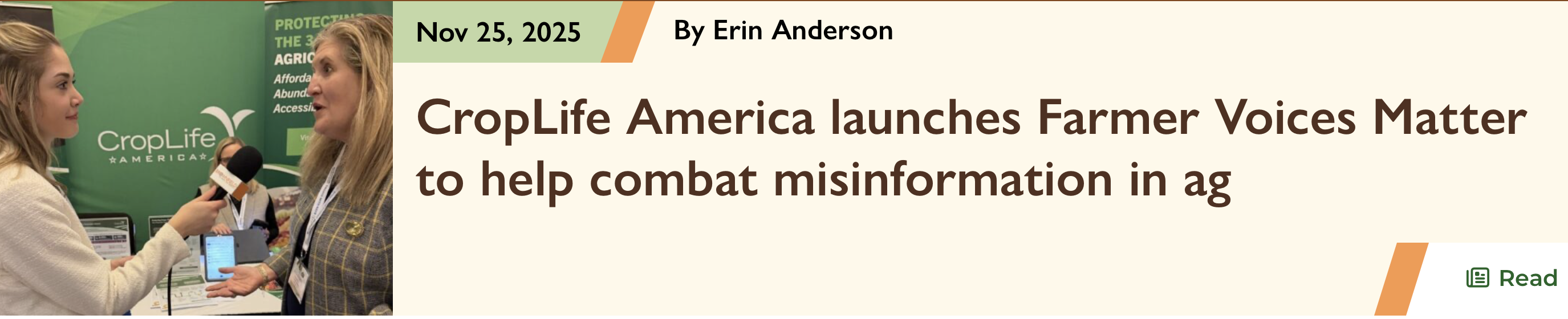
As part of its effort to push back on the MAHA report, CropLife launched a “Farmers Voices Matter” campaign to “combat misinformation” and push back on pesticide health concerns raised in the MAHA report, Dunn explained to Brownfield News.
The campaign amplified messages such as “pesticides are a strictly regulated tool for farmers” and “Americans enjoy one of the safest and most abundant food supplies in the world.”
Peer-reviewed research disputes that claim. A 2019 study found that “the U.S. lags behind other agricultural nations in banning harmful pesticides.” At that time, the European Union banned or was phasing out 72 pesticides still used in the U.S., including cancer-linked atrazine, certain neonicotinoid insecticides tied to bee deaths, and chlorpyrifos, which is associated with brain damage in children. Research has also documented rising cancer rates among young people in major corn-growing states, where pesticide use is widespread.
Against this backdrop of rising concerns about inadequate pesticide protections, the industry lobby prevailed. The MAHA Commission’s final strategy, released in September, dropped the initial report’s warnings about specific pesticides and proposed no new restrictions on their use. Instead, it adopted language promoted by CropLife calling for greater public confidence in EPA’s existing pesticide review process.
CropLife praised the final report, reiterating its claim that the “U.S. regulatory system for pesticides is recognized as the gold standard around the world.”
‘Why are Iowans so sick?’
“Well, that is disgusting,” said Kelly Ryerson, a MAHA advocate, when told about CropLife touting the MAHA report as their biggest win of 2025.
“The MAHA report was about healing America’s sick kids, and Croplife’s proudest moment was getting glyphosate and atrazine restrictions out of it? I would like to see them present this ‘win’ at the hospital bedsides of pediatric cancer victims throughout farm country, and see how that resonates,” Ryerson said. “Shame on Croplife and the administration for prioritizing chemical company profits over American children.”
Protecting pesticide sales is not the same as protecting farmers.
– Angela Huffman, Farm Action
“The pesticide industry won,” said Vani Hari, MAHA advocate and founder of the Food Babe Army. “They removed everything” they found threatening from the report.
Hari said she felt “beaten down,” by the experience. “Obviously I knew this stuff happens, But to see it up close from inside the White House … That was really hard to watch,” she said. “I went in not understanding exactly how corrupt and sophisticated it is behind the scenes in terms of preventing any kind of progress.”
Angela Huffman, president of the farmer-led advocacy and watchdog group Farm Action, took issue with CropLife’s “Farmers Voices” effort. “Protecting pesticide sales is not the same as protecting farmers,” she said.
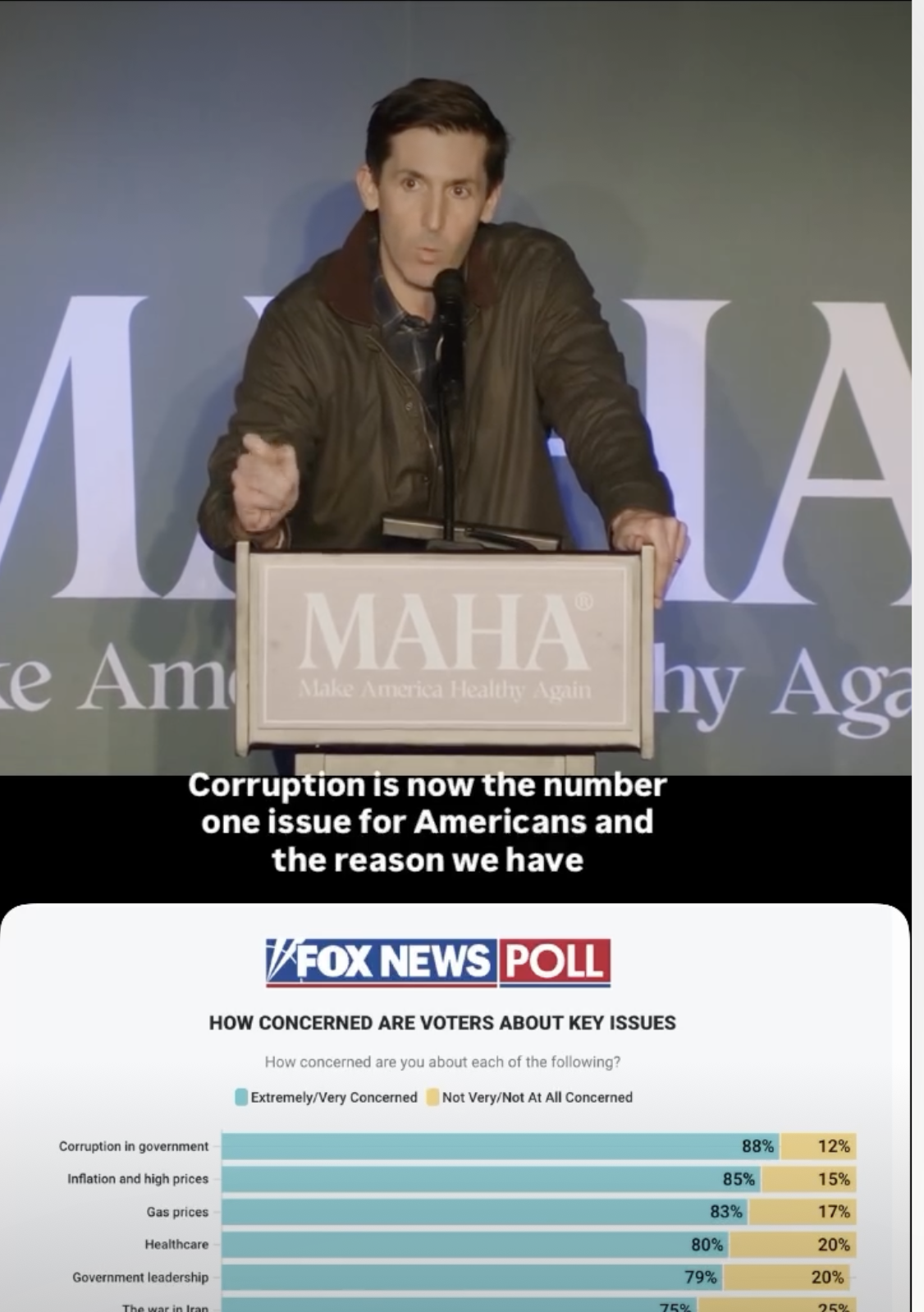
Calley Means, a prominent MAHA advocate and senior adviser to Kennedy who resigned from the Trump administration on October 22, expressed frustration about corruption in a recent speech and Instagram post, lamenting that corporate profits are taking precedence over the needs of farmers and the health of Americans.
“Why do family farms have a boot on their neck with incentives that only help the big guys? Why is China and hedge funds buying up so much land in Iowa? And why are Iowans so sick? The answer to these questions is actually very simple. It’s because very powerful interests profit from these dynamics,” Means said.
When reached for comment about the frustration of MAHA advocates, CropLife spokesperson Annemarie Pender told U.S. Right to Know: “CropLife America shares the MAHA Commission’s goal of expanding access to affordable, nutritious foods for America’s children,” and will continue to “advocate collaboratively for government implementation of MAHA recommendations that are grounded in sound science and a weight-of-the-evidence approach.”
Former lobbyists at EPA work with pesticide lobbyists tied to Trump
CropLife is a formidable force in Washington, D.C. Since 2020, the trade group has spent more than $84 million advancing pesticide industry interests, according to tax records. But CropLife was just one part of a much larger lobbying effort to counter the MAHA report, backed by powerful industry groups and allies inside the White House.
At least 29 high-level officials in the Trump Administration worked for Bayer’s lobbying or legal network, as U.S. Right to Know reported. Documents obtained by the Center for Biological Diversity (and released here for the first time) show that CropLife’s contact to set up a meeting to discuss the MAHA strategy was then-senior EPA advisor Turner Bridgeforth, a former lobbyist for pesticide manufacturer Corteva Agriscience.
The documents show that Bayer also contacted senior EPA officials about its Supreme Court case, which sought to shield Monsanto from lawsuits alleging it failed to warn consumers about Roundup’s cancer risks, and about an influential glyphosate study retracted because Monsanto ghostwrote it.
Bayer’s lobbying force in D.C. at the time included 45 registered lobbyists, many of whom previously worked for Trump’s political campaigns or administrations. Ballard Partners and Mercury Public Affairs, two lobbying firms that previously employed White House Chief of Staff Susie Wiles, were both retained by Bayer after Trump’s election.
Brian Ballard, the former employer of both Wiles and former Attorney General Pam Bondi – and the top fundraising bundler for Trump’s 2024 campaign – personally lobbied for both Bayer and the American Chemistry Council in 2025.
Read more from U.S. Right to Know: