


More than six years after COVID-19 emerged in China and killed millions worldwide, newly released intelligence records show that the Defense Intelligence Agency (DIA) was evaluating a detailed lab-origin scenario as early as March 2020 — weeks into the pandemic and well before the issue became a subject of public debate.
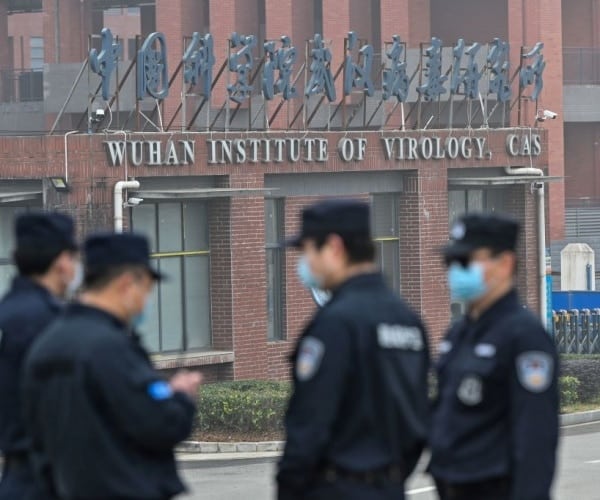
Dated March 27, 2020 — just 16 days after COVID-19 was officially declared a pandemic — the DIA “Authoritative Assessment” appears as part of a slide deck and supporting material shared among analysts and senior officials within the Defense Department’s intelligence arm. The assessment focuses heavily on the Wuhan Institute of Virology (WIV) and its leading coronavirus researcher, Zhengli Shi, whose laboratory for years conducted high-risk experiments on wild bat coronaviruses.
The never-before-published details were revealed in bits and pieces over the last three months in court-ordered productions of COVID origins intelligence records released by the agency in response to a Freedom of Information Act (FOIA) lawsuit filed by U.S. Right To Know more than a year and a half ago. The new details bring added context to slides that were previously released in early 2025, showing they were part of a broader, evolving assessment on the pandemic’s roots that the DIA had been shaping for months.
On a previously published slide headed “Hypothetical Laboratory Origin of SARS-CoV-2,” the assessment sketches a step-by-step timeline of real and speculative work at the WIV that explains the techniques for how the virus that caused the pandemic could plausibly have been created in a lab with insufficient biosecurity containment. It then posits that an uncharacterized virus escaped in mid-2019, sparking the outbreak, and that the Wuhan institute later published disinformation that analysts speculated helped to bolster a natural-origin narrative.
On a final slide titled “Concluding Points” — also previously released, but now shown to be part of the March 2020 assessment package — a comment bubble appended to a list of observations about WIV’s capabilities reads: “The molecular biology capabilities of WIV and the genomic assessment are consistent with the hypothesis that SARS-CoV-2 was a lab-engineered virus that was part of a bank of chimeric viruses in Zhengli Shi’s laboratory at WIV that escaped from containment.”
The new material also shows the DIA’s detailed early assessment circulated through the agency’s top ranks just weeks into the pandemic, but the DIA’s official position remained that the virus’s origins were “unknown.”
FOIA lawsuit prompts disclosures
The latest records were released across multiple productions in November and December 2025, and January 2026, in response to the ongoing FOIA lawsuit filed against the agency in April 2024. While the few new details are revelatory, the productions in general remain shrouded in secrecy. The DIA has fully withheld hundreds of pages it deemed classified or otherwise exempt from disclosure, and many of the pages that were produced are nearly entirely blacked out, with heavy redactions obscuring key context, sourcing and internal discussions.
Still, taken together, the disclosures represent one of the few instances in which any U.S. intelligence documents addressing the origins of COVID-19 have been made public. Intelligence agencies have largely resisted releasing such material despite repeated calls for transparency from lawmakers, watchdog groups and journalists.
The same lawsuit previously revealed a June 2020 genomic analysis by the National Center for Medical Intelligence (NCMI), a DIA component, which expressed that SARS-CoV-2 may have originated from a laboratory incident at the Wuhan Institute of Virology. In light of the new records, the genomic assessment – first reported on by U.S. Right To Know in April – now appears to be part of an ongoing evaluation of the DIA’s broader assessment in the months after the pandemic erupted.
The newly released records show that even though the agency quickly outlined and seriously considered a detailed lab-origin hypothesis, the March 2020 authoritative assessment formally concluded that the virus’s origins “remain unknown.” To date, no direct progenitor virus that could have evolved into SARS-CoV-2 has been identified, and neither a natural-spillover origin nor a lab-associated origin has been proven.
The DIA’s public affairs office declined comment, referring questions to the Office of the Director of National Intelligence. ODNI did not respond to several requests for comment this week.
Leadership-level awareness and continued revisions
The latest releases also include heavily redacted emails exchanged from June through October 2020 showing that DIA analysts continued evaluating genomic similarities between SARS-CoV-2 and other coronaviruses while revising their internal briefing slides and graphics in the months after the pandemic was declared.
As early as March 4, 2020 — roughly three weeks before the agency’s “authoritative assessment” was finalized — analysts circulated unclassified scientific articles, reflecting how quickly the agency began tracking emerging research.
The emails show that the agency’s senior officials were directly messaged or copied on internal discussions, including then–DIA Director Lt. Gen. Robert Ashley, former Chief of Staff Johnny Sawyer, and former Deputy Director Suzanne L. White, indicating they were made aware in real time of the agency’s ongoing evaluations of its origins assessment.
By October 2020, the agency initiated a formal re-evaluation using Analysis of Competing Hypotheses (ACH), a structured intelligence method designed to test multiple explanations against available evidence. While the emails reflect sustained internal scrutiny, redactions obscure which lines of evidence ultimately carried the most weight.
But at least some of the documents lay out the DIA’s early lab-origin scenario in a chronological, step-by-step sequence based on what analysts describe as known activities and capabilities at the Wuhan lab.
The scenario begins with years of field sampling and laboratory work on bat coronaviruses, then moves into published research in which scientists used a technique called reverse genetics to create infectious clones — full-length genetic copies capable of producing live infectious virus — and chimeric viruses by swapping in different spike proteins, the features viruses use to infect human cells.
The hypothesis then draws on prior publicized experiments to make SARS-like and MERS-like viruses more infectious to argue that Chinese researchers could have added a furin cleavage site to a SARS-like virus, and tested such constructs under BSL-2 conditions – a biosafety level widely viewed as inadequate for work involving potential pandemic pathogens. The scenario describes the use of plasmids and cloning techniques that, in the analysts’ view, could enable the assembly of hybrid viruses from modular genetic parts.
The scenario ends with a proposed mid-2019 escape infecting civilians in Wuhan, followed by the publication of data about related viruses — including RaTG13, the closest known relative to SARS-CoV-2 — which analysts characterize as part of a post-outbreak disinformation effort to steer attention toward a natural origin.
A separate flowchart titled “Hypothetical Origin of SARS-COV-2” visually maps this logic using laboratory shorthand, referencing reverse-genetics plasmids, receptor-binding domains, restriction enzyme digests and a step labeled “Synthesize RG plasmid with Spike RBD cassette and FCS.”
The assessment also highlights observations and genomic features of SARS-CoV-2 that analysts view as notable, including the absence of a clearly identified progenitor virus and the presence of a furin cleavage site – a feature that significantly boosts its ability to infect humans that has not been found in any of the virus’ close relatives.
Missed impact on public perception?
The March 2020 assessment was drafted just days after the publication of “The Proximal Origin of SARS-CoV-2” in Nature Medicine, a highly influential paper in which several prominent scientists concluded, “we do not believe that any type of laboratory-based scenario is plausible.”
Emails later released under FOIA show that prior to the paper’s publication, senior U.S. health officials, including Dr. Anthony Fauci, discussed the framing of the paper with its authors. Around the same time, The Lancet published a statement signed by dozens of scientists that praised Chinese researchers and condemned lab-origin claims as conspiracy theories. That effort was later revealed to have been orchestrated behind-the-scenes by Peter Daszak of EcoHealth Alliance – a collaborator with the WIV on high-risk coronavirus research funded by the U.S. government.
Critics have argued that these and other early interventions narrowed the range of acceptable views and contributed to the lab-origin hypothesis being widely dismissed.
In the years since, several major news organizations have revisited their early coverage. A former Washington Post fact-checker has expressed regret over debunking the lab-incident hypothesis, while a New York Times columnist acknowledged the possibility that it was sidelined too quickly. Last week, the Times published an interview with NIH Director Jay Bhattacharya in which he said he believes a lab-leak origin of the pandemic is “pretty close to certain.”
Details of the DIA’s lab-origin scenario were not explicitly included in unclassified COVID origins summaries released by the ODNI in 2021 and 2023, which provided only high-level conclusions and showed agencies divided – often with low confidence – over competing explanations.
While a Newsweek report in April 2020 cited a DIA assessment from the prior month noting the possibility of an accidental lab release due to unsafe practices, it did not include the level of detail and specificity about the suspected engineering steps or post-outbreak obfuscation contained in the newly released records.
Earlier and full disclosure of intelligence analyses might have fostered a more balanced debate and prompted earlier scrutiny of biosafety practices at laboratories conducting high-risk virus research, some transparency advocates, politicians and proponents of the lab leak hypothesis have argued.