









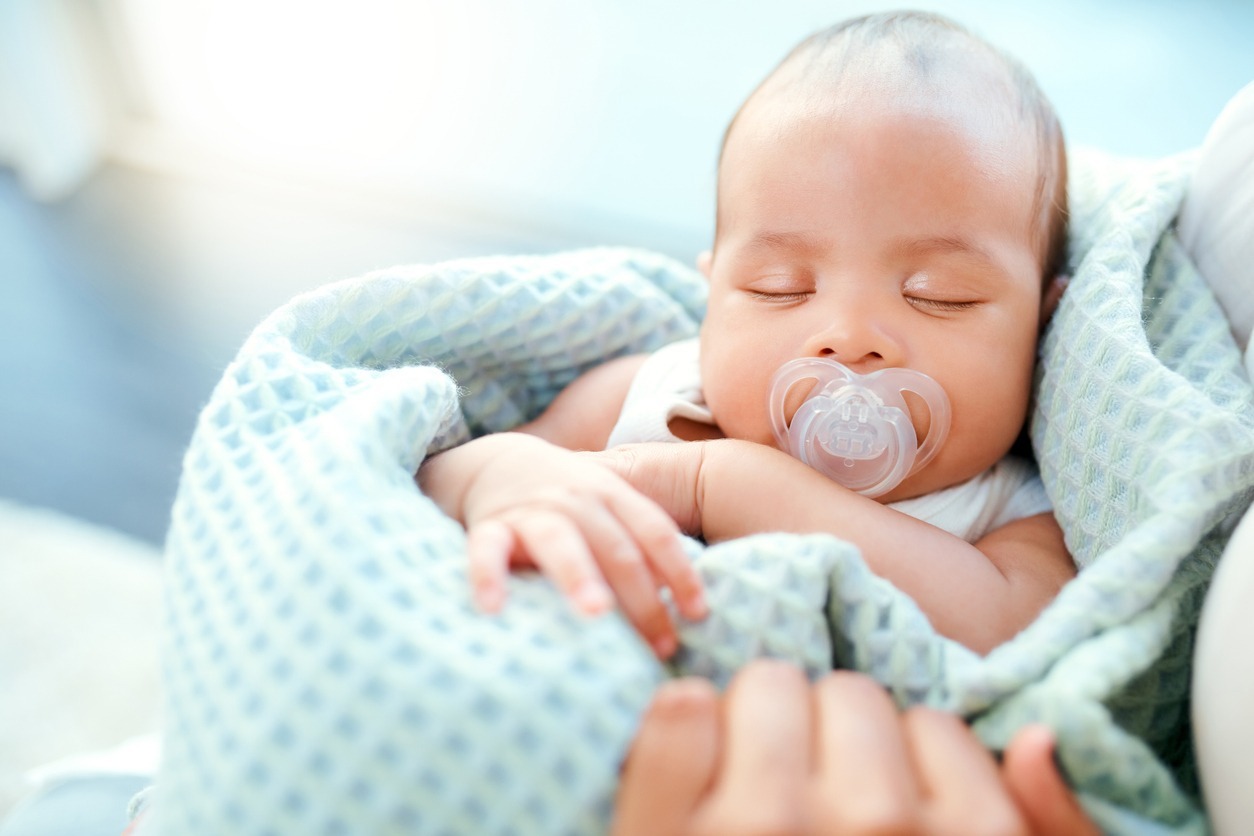
Pacifiers can release bisphenol A, a chemical linked to hormone disruption and developmental problems, with the highest levels found in one marketed as “BPA-free,” a new study shows.
The research, published Jan. 24 in Environmental Science and Pollution Research, raises questions about hidden chemical exposure during infancy and how baby products are regulated and labeled. It is among the first to quantify how much BPA can leach from pacifiers and estimate how much infants and toddlers, whose bodies and hormone systems are still developing, may absorb during everyday use.
The scientists found seven commercially available pacifiers released BPA in amounts ranging from tens to tens of thousands of nanograms—or billionths of a gram—per pacifier. Even the lowest levels of 33 nanograms exceeded Europe’s current safety threshold for infants and toddlers. (U.S. regulatory guidance considers up to about 150,000 nanograms per day safe for a newborn weighing about 6.6 pounds, but that is based on decades-old toxicology data.)
Those tiny amounts matter because pacifiers are designed for prolonged, repeated contact with a baby’s mouth. BPA is an endocrine disruptor known to act at extremely low concentrations, leaving little margin for safety in early life when infants have a limited ability to process and eliminate chemicals.
BPA is banned in baby bottles and sippy cups in both the European Union (EU) and United States because the chemical has been shown to leach from plastics into food or liquid. However, pacifiers are not subject to the same restrictions. The study does not conclude that pacifiers cause harm, but it shows that they can meaningfully increase babies’ cumulative exposure to BPA and that “BPA-free” labels are not reliable.
Key findings include:
- BPA was detected in all seven pacifiers tested, including those labeled “BPA-free.”
- Total migration (release) per pacifier ranged from 33 nanograms to 26,536 nanograms, or billionths of a gram. Six of the seven pacifiers released less than 1,000 nanograms in total.
- The highest BPA release came from the shield of a pacifier marketed as “BPA-free.” Only one shield sample had levels below the lab’s detection limit.
- Both silicone and latex nipples released measurable BPA, indicating migration was not limited to a single material type. Release varied widely even among pacifiers made from similar materials.
- The nipple parts generally released much less BPA than the shields, typically composed of hard plastics. Several had levels below the laboratory’s detection limit.
“These findings demonstrate that pacifiers can constitute a relevant early-life source of BPA exposure and contribute to already critical background levels,” the researchers said.
They added that the results “underline the need for harmonized regulatory standards and independent verification of ‘BPA-free’ claims to ensure adequate protection of infants and toddlers.”
Why BPA exposure can harm infants
Widely used in plastics, BPA is commonly found in processed food and food packaging and other consumer products. Early exposure, including through breastfeeding, may contribute to impaired memory and learning and increase the risk of developing conditions such as heart disease, stroke, type 2 diabetes, obesity, and cancer later in life, even at low doses.
BPA’s substitutes, including bisphenol F (BPF) and bisphenol S (BPS), have also raised health concerns, and studies show BPA can still contaminate products labeled “BPA-free” during manufacturing, even when it is not intentionally added.
The latest findings build on previous research that shows:
- BPA exposure during pregnancy can alter gene changes shaped before birth, potentially increasing the risk of disease in childhood and adulthood.
- Bisphenols, including BPA, can migrate from pacifiers under simulated oral conditions.
- European consumer groups detected BPA in several pacifier brands, including models labeled “BPA-free,” with some samples exceeding EU migration safety limits.
- Pacifier use was associated with higher levels of bisphenol S, a BPA substitute, in infant urine, linking pacifiers to internal bisphenol exposure.
- Pacifiers and toys can leach BPA at extremely low levels, sometimes below traditional detection limits.
- Biomonitoring studies detected BPA in children’s saliva after contact with orthopedic devices, indicating child-contact products can contribute to measurable exposure.
BPA levels in pacifiers exceed EU safety limits
In this study, the researchers analyzed seven commercially available pacifiers made in Germany, China, and India. Each pacifier was taken apart, and a standard laboratory method measured how much BPA migrated into a test liquid. The study used methanol, a solvent that extracts more BPA than saliva or water.
To compare results with earlier studies and regulatory benchmarks, researchers combined the BPA released from each pacifier’s shield and nipple to calculate a total migration value per product. They found that exposure from pacifiers can significantly add to infants’ overall intake, even under conservative assumptions.
In a worst-case scenario, a high-migration pacifier could raise an infant’s exposure by about 2 micrograms per kilogram of body weight per day when combined with background exposure from food and other sources. While those levels fall below the European Food Safety Authority’s (EFSA) older 2015 safety limit, they exceed the agency’s much stricter 2023 threshold by thousands of times.
Under more realistic use, scientists found the highest-migration pacifier exceeded the new European limit by about 1,900 times for infants and 900 times for toddlers. Even the lowest-migration pacifier exceeded the limit, by roughly 50 times for infants and 25 times for toddlers.
While allowing researchers to estimate how much BPA infants might take in from pacifier use, the data do not make it possible to calculate precisely how much pacifiers contribute to total exposure. That would require detailed population-level data on pacifier use, feeding practices and other sources of exposure.
Regulation lags behind science
In the European Union, BPA is broadly banned in food-contact materials under rules that took effect in January 2025, but pacifiers are not explicitly covered. Austria remains the only EU country with a national ban on BPA in pacifiers.
The U.S. Food and Drug Administration barred BPA from baby bottles and sippy cups in 2012, but pacifiers are regulated mainly for physical safety while “BPA-free” labeling remains voluntary.
Given Europe’s sharply reduced safety threshold and evidence that background exposure already exceeds that limit, the researchers say even small additional sources matter. The wide differences between tested pacifiers underscores the need for continuous market surveillance and health risk assessments to ensure infants are adequately protected, they say.
“Given the absence of EU-wide regulation for BPA in pacifiers and the newly defined exposure limits, a reassessment of oral BPA sources for infants and toddlers is warranted,” they said. “This study provides important data for consumer safety and regulatory decision-making concerning BPA exposure in early childhood.”
To reduce your baby’s exposure to BPA:
- Avoid heating plastics – don’t microwave bottles or pacifiers; warm with hot water instead.
- Use glass, stainless steel, or silicone – safer alternatives to plastic.
- Replace old or scratched items – damaged plastics can release more BPA.
- Opt for fresh or frozen foods – limit canned baby foods.
- Wash gently – hand-wash plastics with mild soap; avoid harsh detergents and dishwashers.
Reference
Herwanger L, Sternecker K, Kühnisch J, Reichl F-X, Högg C. Migration of bisphenol A from commercially available pacifiers: HPLC-FLD analysis and exposure assessment in infants and toddlers. Environmental Science and Pollution Research. Published online January 24, 2026. doi:10.1007/s11356-026-37444-1