


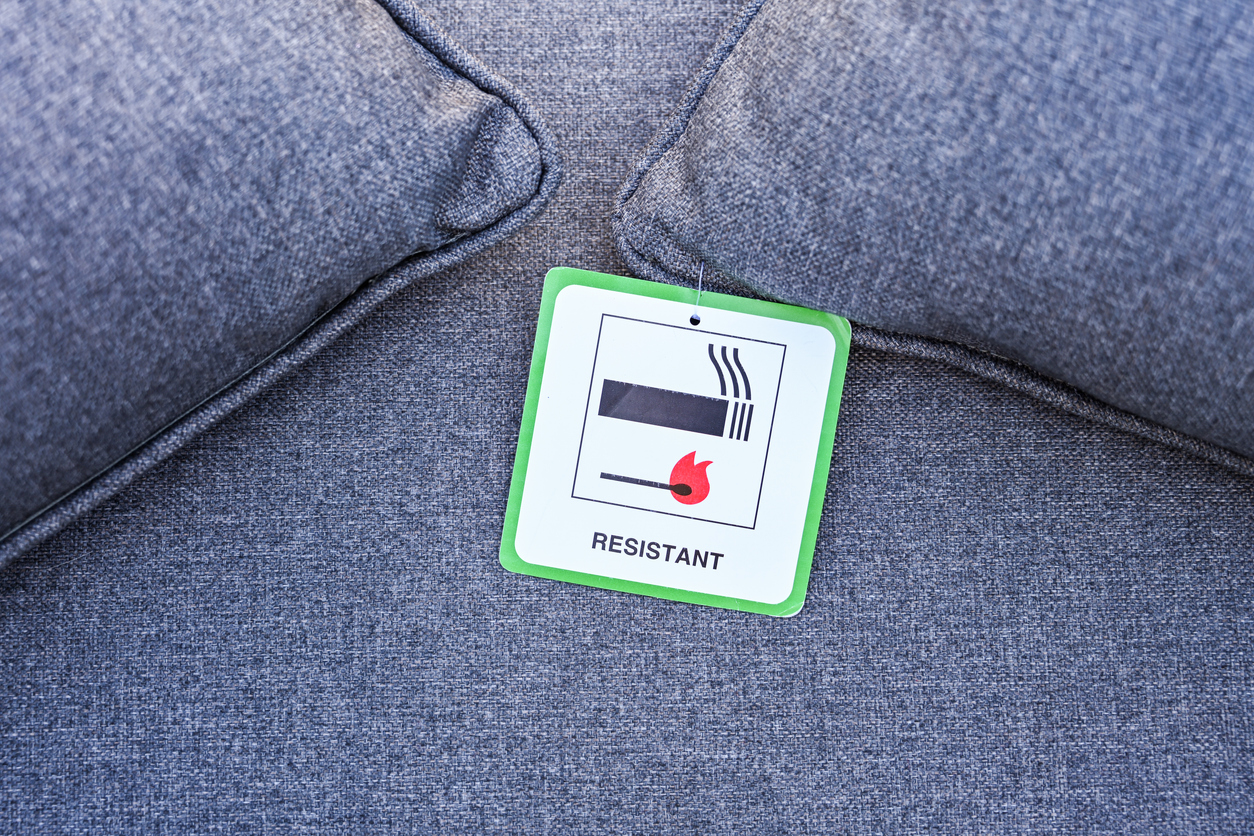
Flame-retardant chemicals widely used in sofas, mattresses, electronics, textiles, and other products are increasingly linked to cardiovascular disease risk and other serious health problems, according to a sweeping scientific review.
The review, published last month in Environmental Science & Technology, synthesizes over a decade of research on organophosphate ester flame retardants (OPFRs), adopted by industry as safer alternatives to toxic brominated flame retardants (PBDEs). Its findings suggest these widely used substitutes may be as dangerous than the chemicals they replaced at a time when exposure to flame retardant chemicals, past and present, is widespread.
“Robust epidemiological evidence demonstrates significant associations between OPFR exposure and cardiovascular morbidity across multiple populations,” the reviewers wrote.
Because OPFRs are not chemically bound to consumer products found in homes and workplaces, they disperse into indoor air and dust, creating near-constant exposure. People are also exposed through skin contact and contaminated food, with children, pregnant women, and workers such as firefighters at greatest risk, the reviewers say.
Across multiple studies and populations, they found strong evidence of:
- Overall cardiovascular risk
- Study participants with higher OPFR exposure had about a 25% higher odds of cardiovascular disease, the leading cause of death worldwide, versus those with lower exposure.
- Exposure to mixtures of flame retardants—and to flame retardants alongside other chemicals such as PFAS—was linked to stronger harmful effects than exposure to single chemicals.
- Heart disease and death
- Exposure was linked to coronary heart disease, arrhythmias, and cardiovascular mortality.
- In a large U.S. study following more than 3,200 adults aged 40 and older, higher levels of the breakdown product bis(2-chloroethyl) phosphate (BCEP) were linked to a 26% higher risk of death from any cause and a 32% higher risk of death from cardiovascular disease, even after accounting for smoking, weight, age, and existing illness. A follow-up analysis of nearly 7,000 participants confirmed these findings.
- In research from southern China, participants with higher OPFR exposure—those in the top 25% of the study population—had an 84% higher risk of coronary heart disease than those with average exposure. A breakdown product appeared to play a major role, disrupting sugar and fat metabolism.
- Blood pressure, metabolism, and kidneys
- Higher exposure was linked to high blood pressure, including during pregnancy and in children and adolescents aged 8-17—an early warning sign that can persist into adulthood and raise the risk of heart disease later in life.
- Studies found associations with metabolic syndrome, including high blood sugar and abnormal cholesterol. For instance, an analysis of national health survey data from 1,157 adults found that higher exposure to two flame-retardant chemicals was linked to an increased risk of metabolic syndrome in men. The risk rose as exposure levels increased.
- OPFR exposure in a study of nearly 2,000 Chinese adults was linked to kidney injury, a risk factor for cardiovascular disease, especially in people with diabetes or high blood pressure (hypertension).
- Some studies also linked exposure to sarcopenia, or loss of muscle mass, which can indirectly increase heart disease risk through reduced physical activity and metabolic dysfunction.
“The transition from brominated to OPFRs was driven by regulatory pressures and environmental concerns, yet emerging evidence suggests that these replacement chemicals may pose substantial health risks of their own,” the reviewers wrote.
They added, “These findings underscore the importance of considering OPFRs as environmental contributors to cardiovascular disease burden, with mixture effects potentially driving the observed associations more than individual compound exposures.”
Children, pregnant women, exposed workers at highest risk
The findings build on increasing evidence that OPFRs may harm multiple organ systems and even disrupt neurodevelopment and cognition. Studies also suggest the toxicity of these chemicals may increase once they are broken down by the body, raising concerns about long-term exposure risks.
Among others, an upcoming study of 831 mother–child pairs in three U.S. cohorts found that prenatal exposure to diphenyl phosphate (DPHP)—a common flame retardant breakdown product—was associated with slightly lower cognitive test scores in children ages 5 to 6. The effect was small, but nearly all pregnant women in the study had measurable exposure.
Children have more exposure and tend to carry higher chemical burdens than adults relative to their body weight, largely because of frequent contact with indoor dust, an increased inhalation rate, common hand-to-mouth behaviors, and faster metabolism, scientists say. At the same time, their developing cardiovascular systems are especially vulnerable to chemical exposures.
Pregnant women represent another particularly vulnerable population. Pregnancy-related heart and blood vessel problems are another concern. Animal studies show that exposure to the flame retardant triphenyl phosphate (TPHP) during pregnancy can trigger symptoms similar to preeclampsia—such as new-onset high blood pressure and protein in the urine—by disrupting normal placental development.
Researchers warn these disruptions may also affect fetal heart and blood vessel development, increasing long-term risk.
How flame retardants may damage the heart
Researchers have identified three main ways organophosphate ester flame retardants may harm the cardiovascular system. First, they can trigger inflammation and oxidative stress, damaging blood vessels and heart cells.
Second, they disrupt nitric oxide signaling, the process that helps blood vessels relax and control blood flow. When this system is impaired, blood pressure rises and arteries are more likely to clog.
Third, they can disrupt hormone and metabolic systems that regulate cholesterol and blood sugar, including receptors that normally protect blood vessels, according to the review.
The researchers note that different OPFR chemicals affect the body in different ways, meaning their health risks can vary and should not all be treated the same. One compound blocks cholesterol removal from cells, causing buildup inside immune cells and turning them into “foam cells,” a key step in clogged arteries.
Another chemical damages heart cells by triggering a form of cell death linked to iron and fat damage. Others have been shown to cause heart muscle damage and scarring.
Stronger protections, safer alternatives needed
Regulation remains uneven, allowing continued widespread use, the authors say. The European Union has restricted some uses, while the U.S. relies largely on state-by-state rules. Most are specific to certain chemicals or products.
Despite significant evidence of harm, the researchers caution that many of the reviewed studies measured exposure and disease at the same time, which makes it difficult to determine cause and effect. They often also relied on single urine or blood samples, which may not capture long-term exposure patterns. Still, the overall pattern is consistent and biologically plausible, the reviewers say.
The authors call for long-term research, better evaluation of combined chemical exposures, and stronger protections for vulnerable groups, including children, pregnant women, and high-exposure workers such as firefighters and e-waste handlers. They say prevention should begin with reducing exposure at the source through clearer labeling, safer alternatives, and stronger oversight of chemicals used in consumer products—especially those found in homes, schools, and healthcare settings.
Comprehensive exposure reduction strategies also represent “fiscally responsible public health investments,” the authors say. BCEP exposure alone has been estimated to account for approximately $717 billion in cardiovascular mortality costs among the highest exposed populations.
“The translation of current evidence into effective prevention strategies constitutes an immediate public health imperative for safeguarding cardiovascular health in an era of pervasive environmental chemical exposure,” the review concludes.
To reduce your exposure to flame retardant chemicals:
- Avoid polyurethane foam products, particularly those with the TB117 label. Choose fibers that are naturally flame resistant such as wool.
- To reduce indoor dust levels, vacuum with a HEPA filter, wet mop, and dust with a damp cloth.
- Wash hands often, especially before eating or preparing food.
- Avoid using rebonded carpet padding made from recycled or scrap polyurethane foam.
- Support legislation at the local, state, and federal level to eliminate the use of toxic flame retardants.
Reference
Sun T, Zhu X, Yang B, Shi J, Song Y, Jiang G. Cardiovascular health risks of Organophosphate Flame Retardant Exposure: A narrative review of the available evidence. Environmental Science &Technology. Published online November 17, 2025. doi:10.1021/acs.est.5c11158